

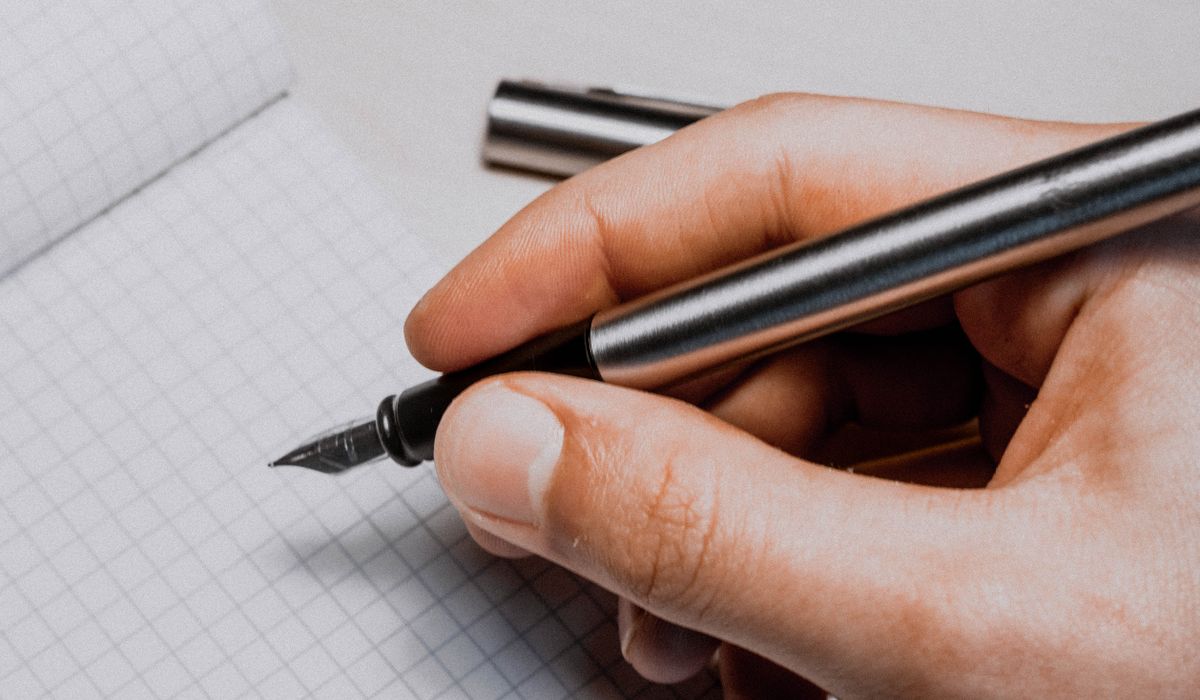
The Benefits of Writing Letters to Friends and Family
Why a Handwritten Letter Still Matters
There is a particular pleasure in opening the postbox and finding, among the bills and the takeaway leaflets, an envelope with your name on it in someone's own handwriting. You recognise the loops and the slant before you have read a word. That small pause on the doorstep is the first benefit of letter writing, and it belongs to the recipient. The second belongs to the writer.
Writing by hand is a slower business than typing, and that is precisely the point. You cannot dash off a sentence and hit send before you have thought about it. The pen moves at the speed of thought rather than the speed of a keyboard, and something useful happens in that gap.
Slower Thinking, Better Words
Most of us type far faster than we write, which means we can produce a message in seconds and regret it in minutes. A letter reverses that. Because your hand cannot keep up with a rush of feeling, you find yourself choosing each word, crossing out a line that sounds harsher than you meant, and finding a kinder way to say the same thing.
That deliberation is worth having, particularly for the letters that matter most: an apology, a condolence, a note to a grandparent you have not seen for months. Few people regret a letter they took an evening over. Many regret the text they fired off in a temper.
- Draft difficult letters in pencil first, then write the fair copy once you have said what you actually mean.
- Keep a rough notebook for the messy version. It saves good paper and lets you be honest on the page before you are tactful.
- Read it aloud before folding. If a sentence sounds stiff when spoken, it will sound stiff when read.
A Keepsake With a Life of Its Own
Messages on a screen are designed to be scrolled past. A letter is designed to be kept. It sits in a drawer, gets tucked into a book, or ends up in a bundle tied with string at the back of a wardrobe, and it is still there a decade later.
That physical quality matters more than we tend to admit. The paper has a weight and a smell; the ink has a colour you chose; there may be a coffee ring, a pressed flower or a stamp from a country you have never visited. When someone rereads a letter years later, they are not just reading the news of that week — they are holding an object that was in your hands.
This is why letters become family possessions. Handwriting is one of the most personal traces a person leaves behind, and a folder of letters from a parent or grandparent is a far richer inheritance than any digital archive.
The Kit Worth Having
You do not need much, but a small, well-chosen stash makes the whole business more enjoyable and removes the excuses.
- Writing paper: look for 100–120gsm. Thinner paper buckles under fountain pen ink and lets it bleed through; thicker stock holds a clean line. Cream or ivory shades are easier on the eye than stark white.
- Envelopes: C6 takes an A5 sheet folded in half, C5 takes A4. Buy a box that matches your paper so you are never hunting for the right size.
- A pen you like holding: a fountain pen with a medium nib naturally slows your hand, but a good rollerball or fineliner works beautifully too. Waterproof ink will survive a spill or a damp journey.
- Stamps in the same drawer as the paper. Posting should never require a separate trip.
- A correspondence notebook: names, addresses, dates sent, and a line or two about what you still owe a reply to.
A wax seal or a thick enclosure is charming, but do check the weight and thickness at the counter — bulky letters can cost more to send.
What to Write When the Page Is Blank
The blank page frightens people far more than it should. A letter is not an essay; it is a conversation with a delay built in. A reliable shape is a piece of news, a memory, and a question. The question matters most, because it hands your correspondent something to answer.
- Describe something small and specific: the state of the garden, a walk you took, a cake that sank.
- Recall a shared moment — the holiday, the terrible weather, the joke nobody else found funny.
- Reply to their last letter by quoting a line back to them. It shows you read it properly.
- Send something: a recipe card, a photograph, a book recommendation, a pressed leaf from your street.
Not every letter needs news. A short note of thanks, a memory of an afternoon you both enjoyed, or a few lines about a book you think they would love all arrive just as warmly.
Making It a Habit
Letter writing survives on routine rather than enthusiasm. Give it a fixed slot — Sunday evening with a pot of tea, or the first Saturday of the month — and it stops feeling like a task you have failed to do and starts feeling like part of the week.
Aim to reply within a fortnight, and let a short letter sent promptly beat a long one that never gets written. If you fall behind, send a postcard and no apology; nobody minds. Many people find that one letter a month to a single person is more satisfying than a scattered flurry in January and nothing until the following Christmas.
Think especially of those who rarely get post: elderly relatives, godchildren, friends who have moved abroad, someone going through a difficult season. A letter cannot be scrolled past or silenced. It waits on the mat, and then it waits in a drawer, and it says, quietly and unmistakably, that someone took the time.


Notebooks
-
Coptic binding creates notebooks that lie flat, making it a practical and rewarding craft for beginners willing to learn a few stitches.

Pens


-

Long established fact that a reader will be distracted
-

Long established fact that a reader will be distracted
-

Long established fact that a reader will be distracted




Journaling
Karla Gleichauf
12 May 2017 at 05:28 pm
On the other hand, we denounce with righteous indignation and dislike men who are so beguiled and demoralized by the charms of pleasure of the moment
M Shyamalan
12 May 2017 at 05:28 pm
On the other hand, we denounce with righteous indignation and dislike men who are so beguiled and demoralized by the charms of pleasure of the moment
Liz Montano
12 May 2017 at 05:28 pm
On the other hand, we denounce with righteous indignation and dislike men who are so beguiled and demoralized by the charms of pleasure of the moment