

Building a Daily Journaling Habit That Actually Lasts
Most journaling habits fail quietly. There is no dramatic moment of quitting — just a notebook that migrates from bedside table to desk drawer to a shelf, and eventually a guilt-inducing glance whenever you spot its spine. The good news is that the habit rarely fails because you lack discipline. It fails because the routine you designed was too ambitious, too vague, or simply not pleasant enough to repeat.
Start Smaller Than Feels Worthwhile
The biggest mistake new journalers make is committing to a full page a day. That works for about a fortnight. A more durable target is three lines, or two minutes, or a single sentence that captures the shape of the day. The point of an early habit is not the output — it is the repetition. You are teaching your brain that this is something you do, not something you attempt.
Try this for the first month:
- One thing that went well today. A sentence is plenty.
- One thing that was difficult. Naming it stops it rattling around your head at 2am.
- One thing you are looking forward to. It can be as small as a decent cup of coffee tomorrow morning.
Three lines takes ninety seconds. On a bad day you will still manage it, and that matters far more than writing beautifully on a good day.
Pick Tools You Genuinely Enjoy Holding
Journaling is a physical act, and the physical experience carries the habit. If your pen scratches, skips or leaves your hand cramped after half a page, you will find reasons not to sit down. This is not fussiness — it is ergonomics.
A few practical notes for choosing equipment:
- Pen weight and grip matter more than ink colour. A slightly heavier barrel often feels steadier and reduces the death grip that tires your hand.
- Match nib or tip to paper. A wet, broad rollerball will bleed and ghost through thin paper, which is discouraging. A fine nib or a smooth gel pen copes with almost anything.
- Lay-flat binding changes everything. A notebook that fights you closed makes writing awkward. Stitched or spiral bindings lie flat; stiff glued spines often do not.
- Keep it visible. A beautiful notebook hidden in a drawer is a beautiful notebook you will forget about.
If you enjoy fountain pens, allow yourself the ritual of filling one. If you prefer a cheap biro that lives in your coat pocket, that is equally valid. The best pen is the one you reach for without thinking.
Anchor the Habit to Something You Already Do
New habits survive when they attach themselves to existing ones. Rather than deciding to journal "at some point in the evening", tie it to a reliable trigger: the kettle boiling, the train journey home, the moment you get into bed. The trigger does the remembering for you.
Timing also affects what you write. Morning pages tend to be clearer and more forward-looking. Evening entries are richer in reflection but compete with tiredness, so keep them short. If you have a long commute, a small notebook in a bag pocket is one of the most reliable journaling setups there is.
Give Your Entries a Loose Shape
A blank page is intimidating; a page with a gentle structure is inviting. You do not need elaborate systems. A simple template you can remember without checking is enough — date at the top, three short sections, done. Some people like a running list of highlights through the week; others prefer a single paragraph that reads like a letter to a friend.
Prompts help on flat days. Keep a short list on the inside cover: What did I notice today that I would otherwise have forgotten? What am I avoiding? What would make tomorrow easier? Rotate through them rather than trying to answer all of them at once.
Stop Judging Every Entry
This is the habit-killer nobody warns you about. You write something dull, decide you are bad at journaling, and the notebook closes for three weeks. But a journal is not a published essay. It is a record, and records are allowed to be messy, repetitive and uninteresting.
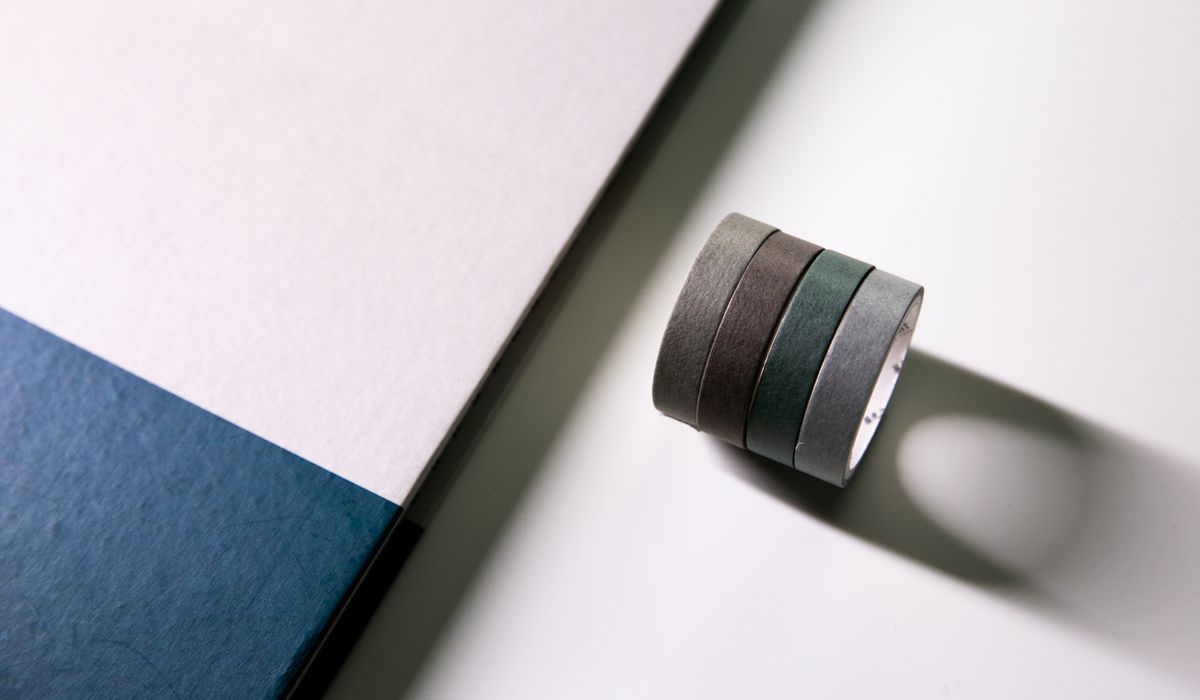
Ban the word "should" from your journal. You should not be writing more, deeper, funnier or more profound. Give yourself permission to write rubbish, to draw a diagram instead of a paragraph, to stick in a ticket stub and write two words beside it. Paper crafts and journaling overlap happily here — washi tape, a pressed leaf, a hastily sketched floor plan of a room you are redecorating. Anything that keeps the page turning counts.
Plan for the Days You Miss
You will miss days. Illness, holidays, deadlines and plain forgetfulness all intervene. The habit only breaks if missing one day becomes missing a fortnight, so decide now what your recovery rule is.
- Never miss twice in a row. One gap is life; two gaps start a pattern.
- Backfill briefly if you want to. A single line labelling a lost day — "busy, exhausted, nothing to report" — keeps the record honest and the chain intact.
- Review monthly, not daily. Flick back through the pages and notice themes. That quiet act of rereading is where journaling quietly pays you back.
Habits that last are usually modest, slightly pleasurable and easy to restart. Pick a pen you like, keep the notebook where you can see it, write three lines instead of thirty, and let the pages accumulate without asking them to be impressive.


Notebooks
-
The right desk lamp reduces eye strain and creates a pleasant evening atmosphere, so consider warmth, brightness and adjustable positioning.

Pens



-

Long established fact that a reader will be distracted
-

Long established fact that a reader will be distracted
-

Long established fact that a reader will be distracted



Journaling
Karla Gleichauf
12 May 2017 at 05:28 pm
On the other hand, we denounce with righteous indignation and dislike men who are so beguiled and demoralized by the charms of pleasure of the moment
M Shyamalan
12 May 2017 at 05:28 pm
On the other hand, we denounce with righteous indignation and dislike men who are so beguiled and demoralized by the charms of pleasure of the moment
Liz Montano
12 May 2017 at 05:28 pm
On the other hand, we denounce with righteous indignation and dislike men who are so beguiled and demoralized by the charms of pleasure of the moment